FPV Drone Parts Explained: Frame, FC, ESC, Motors, VTX, and Goggles
FPV Drone Parts Explained
This is one of the first things every beginner should understand before buying or building an FPV drone. Each component plays a specific role in determining how your drone flies, performs, and delivers real-time video. Whether you’re interested in freestyle flying, racing, aerial photography, or long-range exploration, learning the function of the frame, flight controller (FC), ESC, motors, VTX, and FPV goggles will help you make smarter purchasing decisions and troubleshoot problems with confidence.
In this comprehensive guide, we’ll break down each major FPV drone component in simple terms, explain how they work together, and help you choose the right parts for your flying style.
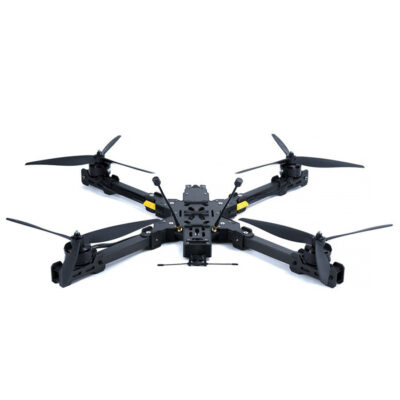
What Is an FPV Drone?
FPV stands for First Person View. Unlike traditional drones, FPV drones stream live video from an onboard camera directly to your FPV goggles, giving you the feeling of sitting inside the aircraft.
FPV drones are popular for:
- Freestyle flying
- Drone racing
- Cinematic videography
- Long-range exploration
- Professional aerial filming
Their speed, agility, and immersive flying experience make them a favorite among drone enthusiasts.
Understanding the Main FPV Drone Parts
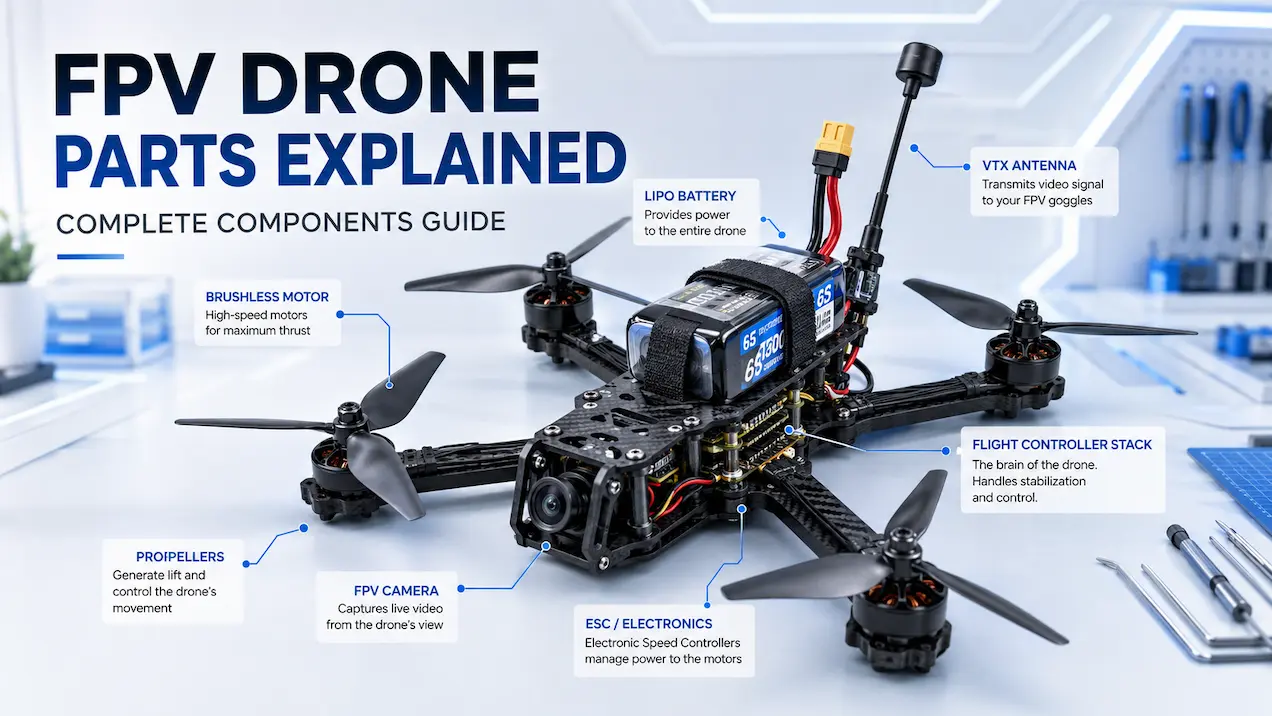
Every FPV drone consists of several essential components that work together to keep the drone stable, responsive, and connected.
The primary parts include:
- Frame
- Flight Controller (FC)
- ESC (Electronic Speed Controller)
- Motors
- Propellers
- FPV Camera
- VTX (Video Transmitter)
- Antenna
- Receiver
- Battery
- FPV Goggles
Let’s explore each one.
1. Frame – The Foundation of Your Drone
The frame is the skeleton of the drone. Every other component is mounted onto it.
A quality frame should be:
- Lightweight
- Durable
- Strong enough to survive crashes
- Easy to repair
Most modern FPV frames are made from carbon fiber because it provides excellent strength without adding unnecessary weight.
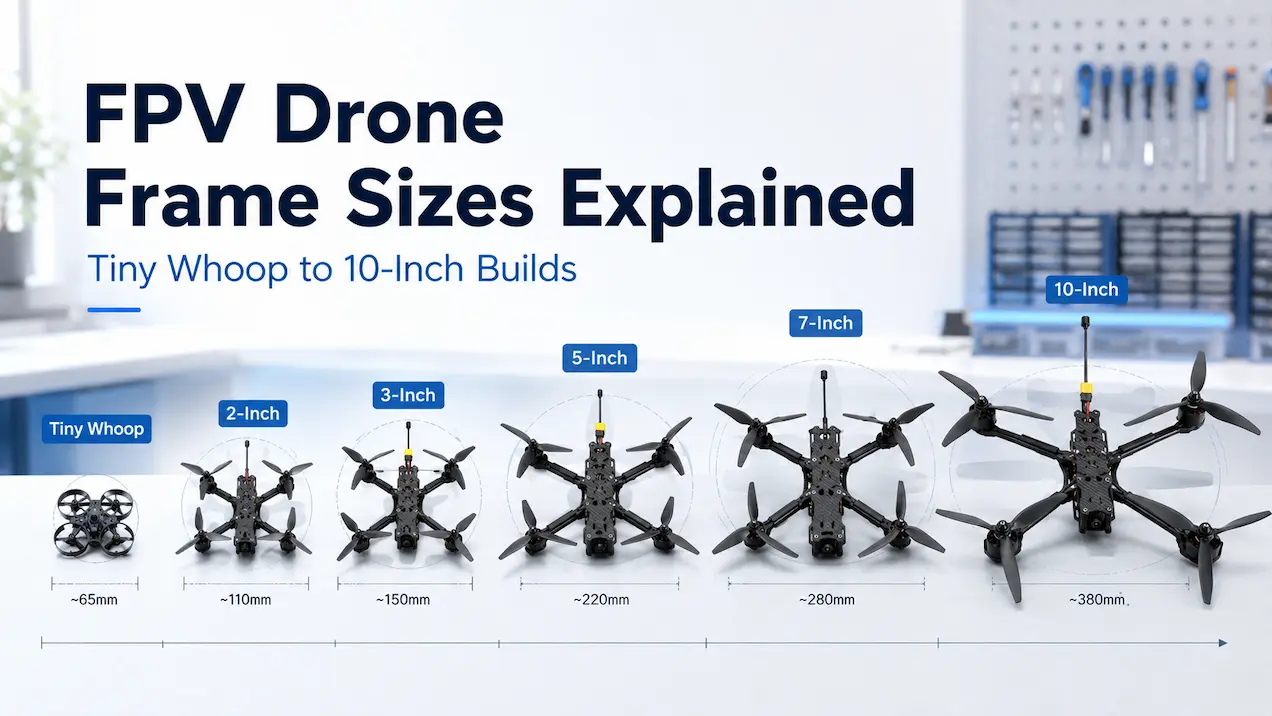
Common Frame Sizes
- 2-inch (Indoor/Micro)
- 3-inch (Lightweight Freestyle)
- 5-inch (Most Popular)
- 7-inch (Long Range)
- 10-inch+ (Heavy Lift)
For beginners, a 5-inch frame offers the best balance of speed, stability, and parts availability.
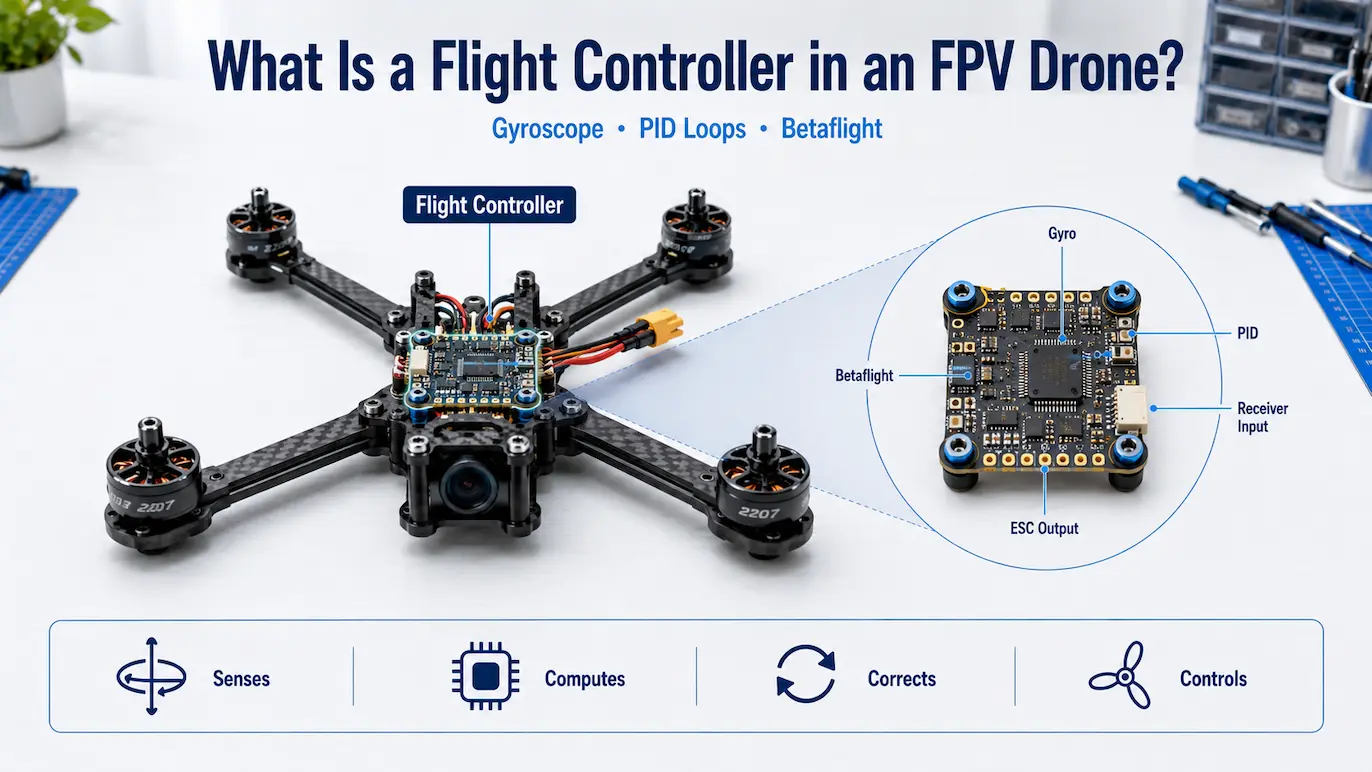
2. Flight Controller (FC) – The Brain of the Drone
The Flight Controller, commonly called the FC, is the computer that controls the drone.
It receives information from:
- Gyroscope
- Accelerometer
- Radio receiver
- GPS (if installed)
Then it calculates exactly how fast each motor should spin.
Without the FC, the drone cannot stabilize itself.
Flight Controller Features
- Flight stabilization
- Sensor processing
- Motor control
- GPS support
- OSD (On-Screen Display)
- Firmware support
Popular firmware includes Betaflight, INAV, and ArduPilot.
3. ESC (Electronic Speed Controller)
The ESC controls the speed of each motor.
When the Flight Controller tells a motor to speed up or slow down, the ESC delivers the correct amount of power from the battery.
Think of it as the communication bridge between the battery and the motors.
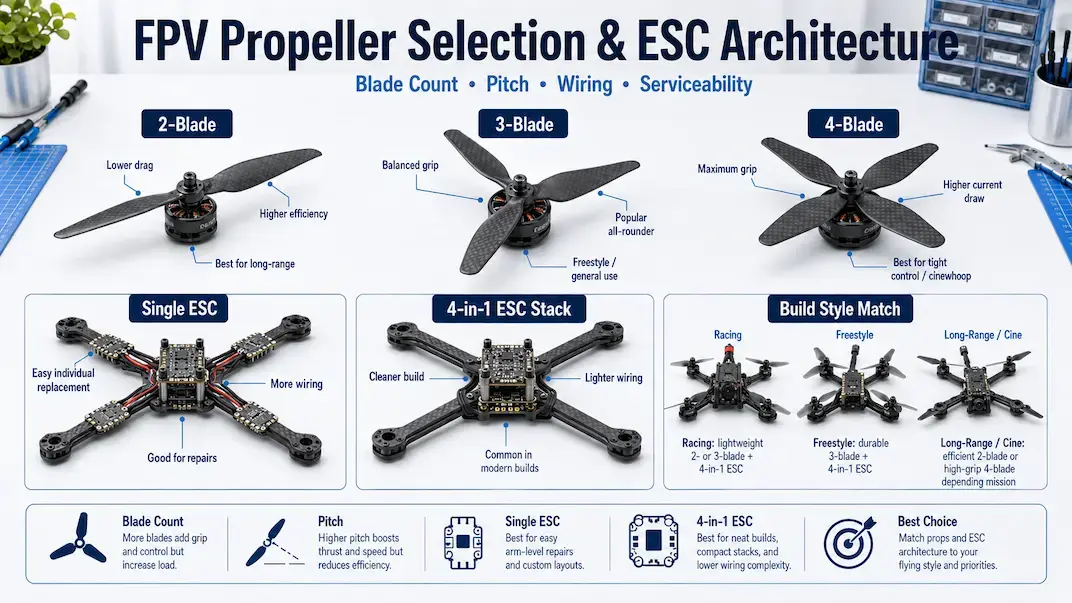
Types of ESCs
- Individual ESCs
- 4-in-1 ESC
Most modern drones use 4-in-1 ESC boards because they save space and simplify wiring.
ESC Ratings
Examples:
- 35A
- 45A
- 55A
- 65A
Higher-rated ESCs can safely handle more powerful motors.
4. Motors – Creating Lift and Speed
Brushless motors provide the thrust needed for flight.
Motor size is written using four numbers.
Example:
2207
- 22 = Stator diameter
- 07 = Stator height
Larger motors generally produce:
- More power
- Higher speed
- Greater efficiency
But they also consume more battery power.
Motor KV Rating
KV tells you how many RPM the motor spins per volt.
Examples:
- 1800KV
- 1950KV
- 2300KV
- 2500KV
Lower KV:
- Better efficiency
- Larger propellers
Higher KV:
- Faster acceleration
- Better freestyle performance
5. Propellers
Propellers convert motor power into thrust.
Choosing the right propeller dramatically changes flight characteristics.
Common sizes:
- 2-inch
- 3-inch
- 5-inch
- 7-inch
Three-blade propellers provide:
- Better grip
- Smoother flight
- More control
Two-blade props often improve efficiency and flight time.
6. FPV Camera
The FPV camera sends live video to your goggles.
Important camera features include:
- Low latency
- Good low-light performance
- Wide Dynamic Range (WDR)
- High image quality
Modern digital systems provide HD-quality video with excellent detail.
7. VTX (Video Transmitter)
The Video Transmitter (VTX) sends the camera’s video signal to your FPV goggles.
Without the VTX, you cannot see where your drone is flying.
Common VTX Power Levels
- 25mW
- 200mW
- 500mW
- 800mW
- 1W+
Higher power generally means longer range, though local regulations may limit transmission power.
Many modern VTX units support adjustable power settings.
8. Antenna
The antenna affects video quality and transmission range.
Good antennas provide:
- Better signal
- Less interference
- Greater flying distance
Two common antenna types are:
- Omni-directional
- Directional
Most pilots use circular polarized antennas because they reduce signal reflections.
9. Receiver (RX)
The receiver receives commands from your radio controller.
Popular receiver systems include:
- ExpressLRS (ELRS)
- Crossfire
- FrSky
ExpressLRS has become extremely popular because it offers:
- Long range
- Low latency
- Excellent reliability
- Affordable hardware
10. Battery
FPV drones typically use LiPo (Lithium Polymer) batteries.
Common battery voltages include:
- 2S
- 3S
- 4S
- 6S
Battery capacity is measured in mAh.
Examples:
- 650mAh
- 850mAh
- 1300mAh
- 1500mAh
Higher capacity increases flight time but also adds weight.
11. FPV Goggles
FPV goggles display the live video transmitted by the drone.
This immersive view is what makes FPV flying so exciting.
Types of Goggles
Analog Goggles
Advantages:
- Affordable
- Low latency
- Large compatibility
Disadvantages:
- Lower image quality
Digital Goggles
Advantages:
- HD video
- Better image clarity
- Cleaner signal
Disadvantages:
- Higher cost
Digital systems are increasingly popular among both beginners and professionals.
How All These Parts Work Together
When you move your radio sticks:
- The transmitter sends commands.
- The receiver passes them to the Flight Controller.
- The Flight Controller calculates motor speeds.
- The ESC powers each motor.
- The motors spin the propellers.
- The drone flies.
- The FPV camera captures live video.
- The VTX transmits the video.
- Your FPV goggles display the flight in real time.
This seamless interaction allows for precise control and an immersive flying experience.
Choosing the Right FPV Components
When selecting parts, consider:
- Your skill level
- Budget
- Flying style
- Drone size
- Battery compatibility
- Upgrade options
Beginners should prioritize reliability and ease of setup over maximum performance.
Common Mistakes Beginners Make
Avoid these common errors:
- Buying incompatible parts
- Choosing oversized motors
- Ignoring battery voltage compatibility
- Using low-quality propellers
- Installing antennas incorrectly
- Forgetting firmware updates
Proper planning helps prevent costly mistakes.
Internal Link Opportunity
Looking for quality FPV drone components? Browse our complete selection of frames, motors, ESCs, flight controllers, VTX systems, and FPV accessories to build or upgrade your drone with confidence.
External Link Opportunity
Want to see FPV flight videos, build tutorials, product launches, and flying tips? Follow us on Instagram for regular updates and inspiration.
Frequently Asked Questions
What is the most important part of an FPV drone?
Every component is essential, but the Flight Controller is often considered the brain of the drone because it manages stability and controls the motors.
What does ESC mean in FPV drones?
ESC stands for Electronic Speed Controller. It regulates the speed of each brushless motor based on commands from the Flight Controller.
Which frame size is best for beginners?
A 5-inch frame is the most popular choice because it offers a great balance of stability, speed, durability, and parts availability.
Are digital FPV goggles better than analog?
Digital goggles provide clearer HD video, while analog goggles are more affordable and offer very low latency. The best choice depends on your budget and flying preferences.
Can I upgrade individual FPV drone parts later?
Yes. Most FPV drones are modular, allowing you to replace or upgrade components such as motors, ESCs, cameras, VTX units, or goggles as your skills and requirements grow.
Final Thoughts
Understanding the key components of an FPV drone is the first step toward becoming a confident pilot or builder. The frame provides the structure, the Flight Controller acts as the brain, the ESC manages motor power, the motors generate thrust, the VTX delivers live video, and the goggles immerse you in the flight experience.
Whether you’re building your first drone or upgrading an existing one, choosing compatible, high-quality parts will improve performance, reliability, and enjoyment. With the right knowledge and equipment, you’ll be ready to experience the excitement of FPV flying while making informed decisions for future upgrades.