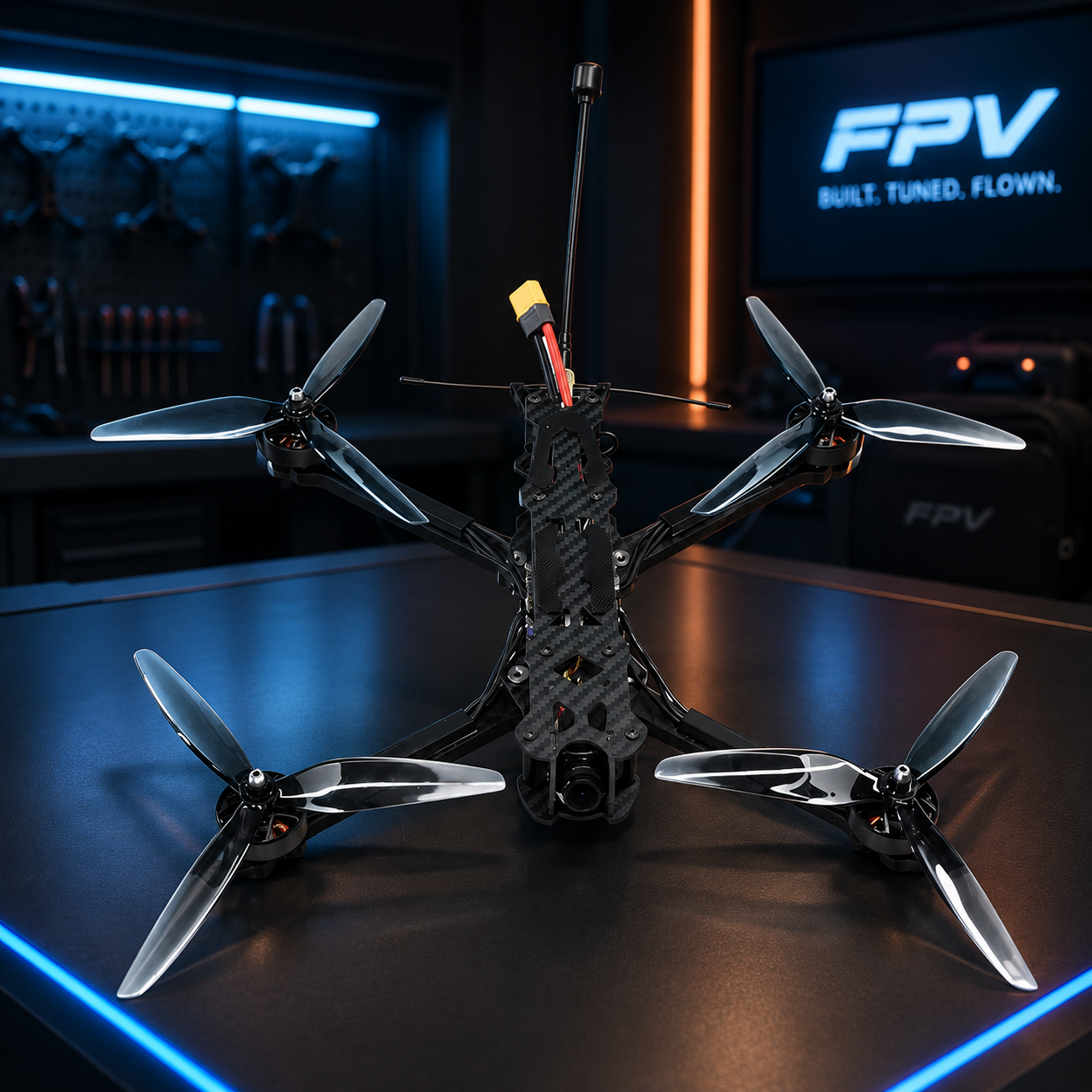
What Is an FPV Drone? Complete Beginner Guide
What Is an FPV Drone? Complete Beginner Guide
If you are wondering what is an FPV drone, the simple answer is this: an FPV drone is a drone that lets the pilot see from the drone’s point of view in real time, usually through FPV goggles or a video screen. Instead of watching the drone from the ground like a normal camera drone, the pilot flies as if they are sitting inside the aircraft.
FPV stands for “First Person View.” This means the drone has a camera on board, and that camera sends a live video signal to the pilot. The result is a much more immersive flying experience. You see what the drone sees, react quickly, and control the drone with a radio transmitter.
FPV drones are popular for drone racing, freestyle tricks, cinematic video, indoor flying, long-range exploration, and technical hobby builds. But for beginners, FPV can feel confusing because it involves more parts than a basic camera drone. You need to understand the drone, goggles, controller, batteries, camera system, video link, and flight modes before buying your first setup.
This guide explains FPV drones in a simple way so beginners can understand how they work, what parts are needed, and what to look for before getting started.
What Does FPV Mean?
FPV means First Person View. In drone flying, it means the pilot sees a live video feed from a camera mounted on the drone.
A normal drone is usually flown by looking at the drone in the sky or watching a phone screen connected to the controller. An FPV drone is different because the video feed is the main way the pilot flies. The pilot wears FPV goggles or uses a display that shows the drone’s camera view in real time.
This makes FPV flying feel faster, more direct, and more immersive than traditional drone flying. The drone’s movement becomes your visual perspective. When the drone turns, dives, rolls, or accelerates, you see that motion instantly through the camera feed.
How Does an FPV Drone Work?
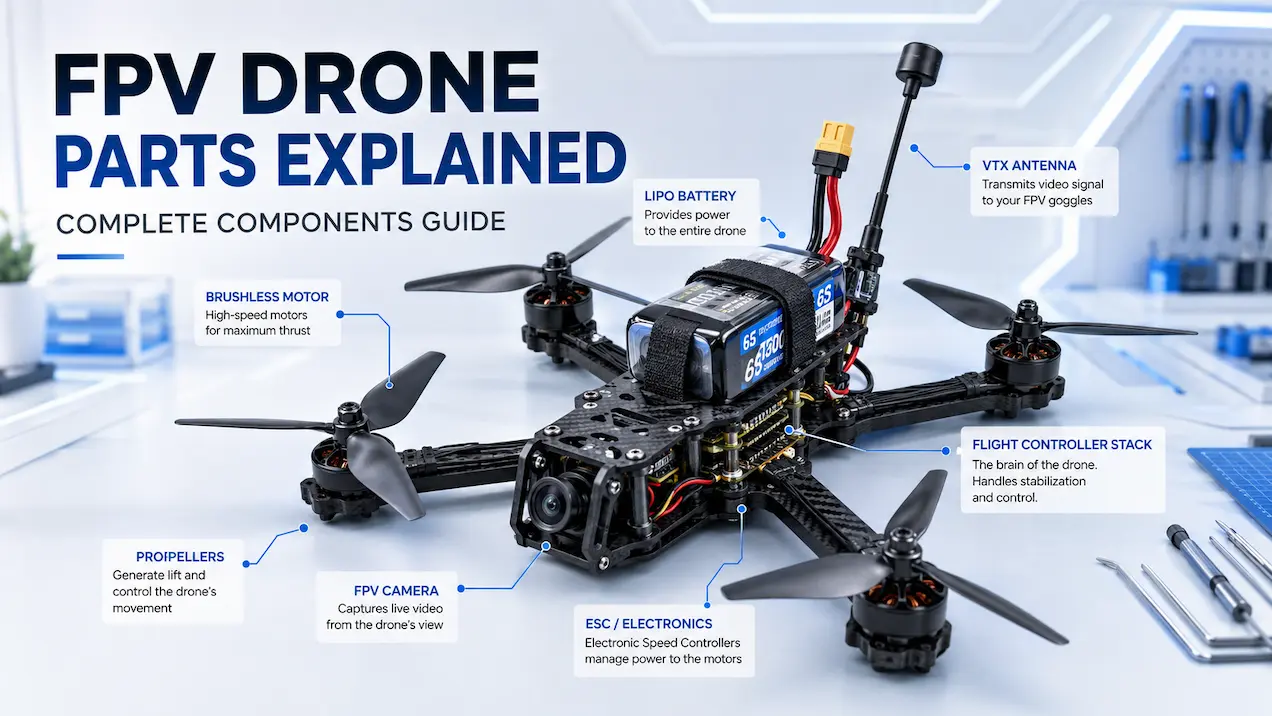
An FPV drone works by combining a flight system with a live video system. The drone flies through motors, propellers, a flight controller, and a battery. At the same time, an onboard camera captures video and sends it to the pilot through a video transmitter.
Here is the basic process:
- The pilot moves the sticks on the radio transmitter.
- The drone’s receiver gets the control signal.
- The flight controller processes the command.
- The motors adjust speed to move the drone.
- The FPV camera captures live video.
- The video transmitter sends the signal to the goggles.
- The pilot watches the live feed and reacts in real time.
This loop happens very quickly. That is why latency matters so much in FPV flying. If the video signal is delayed, the pilot reacts late. For racing, freestyle, and tight spaces, low latency is extremely important.
Main Parts of an FPV Drone Setup
An FPV drone setup has several important parts. Beginners should understand each one before buying a drone.
1. FPV Drone Frame
The frame is the body of the drone. It holds the motors, flight controller, ESC, camera, video transmitter, battery, and other parts.
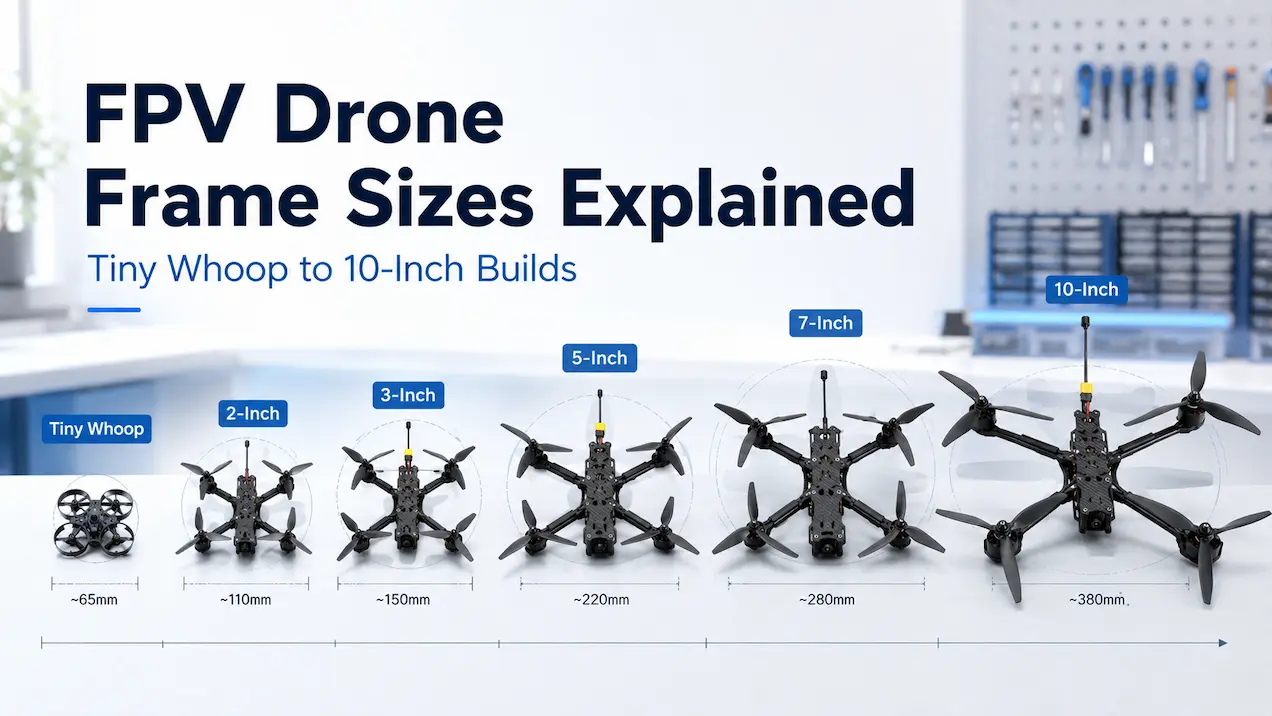
FPV drone frames come in different sizes. Small indoor drones are often called whoops or tiny whoops. Larger outdoor FPV drones may use 3-inch, 5-inch, or 7-inch frames depending on the flying style.
A 5-inch FPV drone is one of the most common sizes for freestyle and racing. Smaller drones are better for indoor flying or beginners who want something safer and easier to practice with.
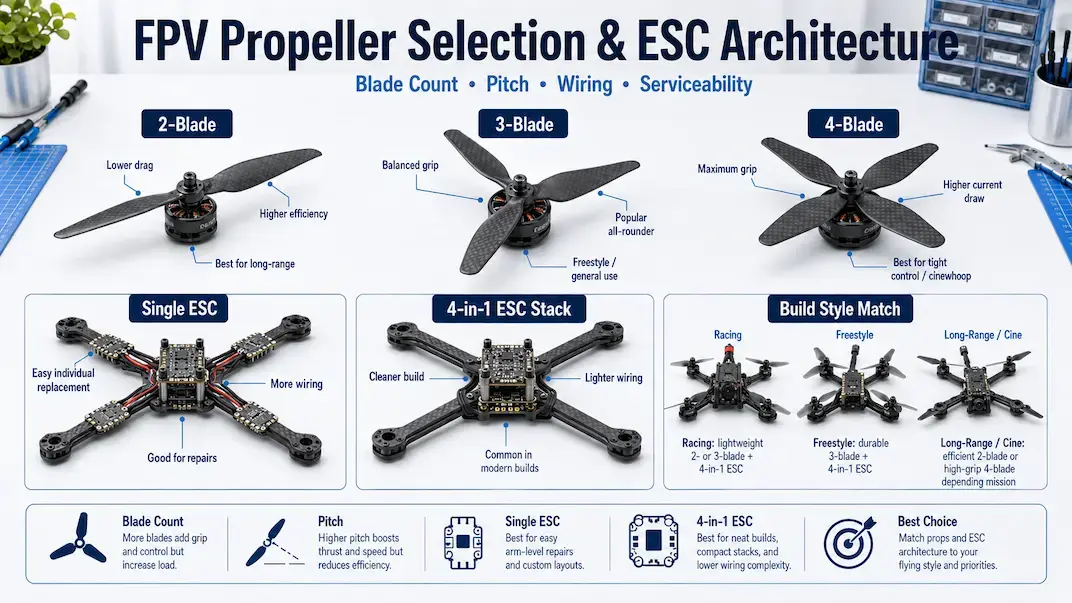
2. Motors and Propellers
The motors spin the propellers and create lift. FPV drones usually use four motors, which is why many are called quadcopters.
The motor size, propeller size, and battery voltage affect speed, power, efficiency, and flight feel. Racing drones use powerful motors for fast acceleration. Cinematic FPV drones may use smoother setups for stable video. Tiny indoor FPV drones use smaller motors and ducted propellers for safer flying.
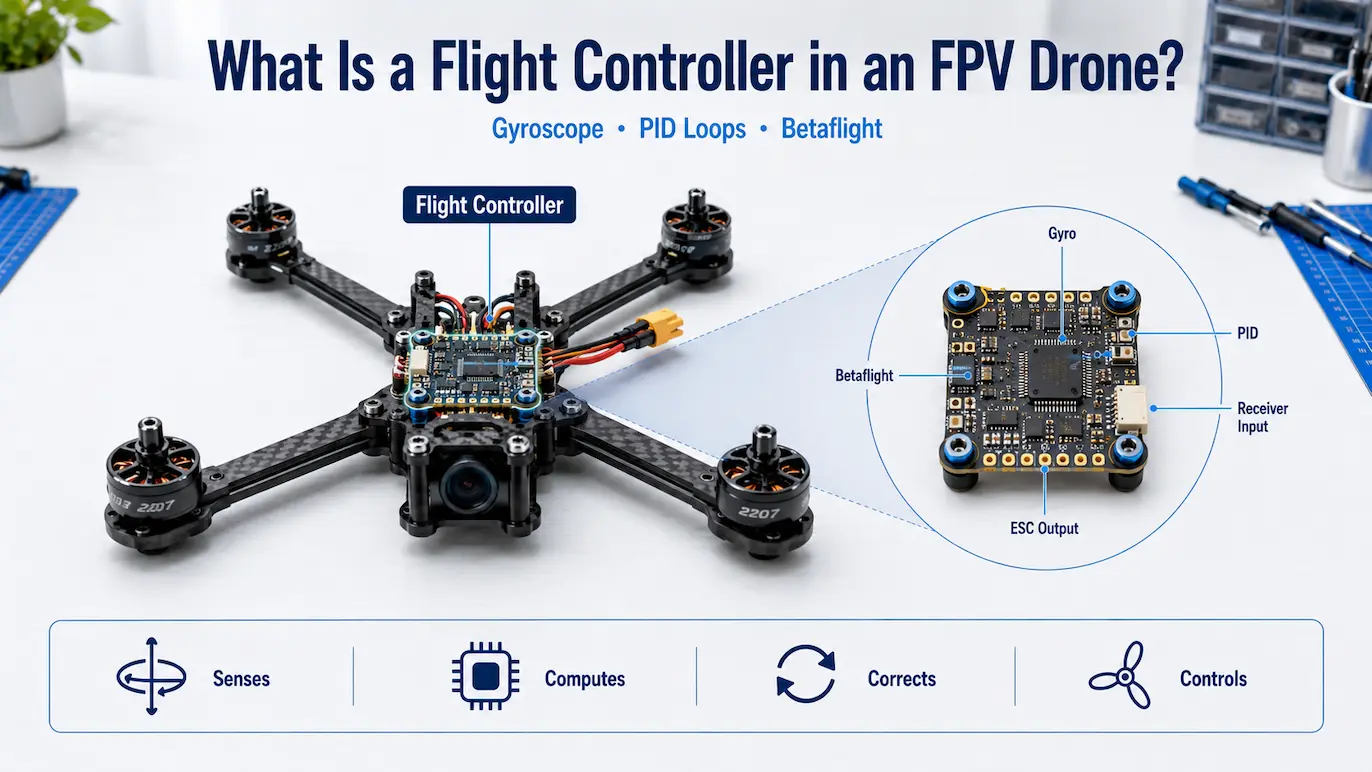
3. Flight Controller
The flight controller is the brain of the drone. It receives input from the radio receiver, reads sensor data, and tells the motors how to respond.
The flight controller helps stabilize the drone and allows different flight modes. Many FPV drones use firmware such as Betaflight, iNav, or similar systems depending on the purpose of the build.
For beginners, the flight controller matters because it affects how the drone feels in the air and what features are available.
4. ESC or Electronic Speed Controller
The ESC controls motor speed. When the flight controller sends a command, the ESC changes how fast each motor spins.
Some FPV drones use a 4-in-1 ESC board, which controls all four motors from one board. Others may use individual ESCs. A reliable ESC is important because FPV drones can pull high current during fast moves, hard turns, and quick throttle changes.
5. FPV Camera
The FPV camera is the camera used for live flying. It is not always the same as the camera used for recording high-quality video.
The FPV camera is designed for low latency and visibility. It helps the pilot see obstacles, judge speed, and control the drone. Some cinematic FPV drones also carry a separate action camera for better recording quality.
6. Video Transmitter
The video transmitter, often called a VTX, sends the camera feed from the drone to the goggles or monitor.
FPV systems can be analog or digital. Analog systems are often cheaper and known for low latency. Digital systems usually offer clearer image quality but can cost more.
The VTX is one of the most important parts of the FPV video signal chain. If the VTX is weak, overheating, set up incorrectly, or using the wrong antenna, the video feed may break up or lose range.
7. FPV Goggles
FPV goggles let the pilot see the live camera view from the drone. This is what creates the first-person flying experience.
There are different types of FPV goggles:
- Box goggles
- Slim goggles
- Analog goggles
- Digital goggles
- HD FPV goggles
Beginners do not always need the most expensive goggles, but they should choose goggles that match the drone’s video system. Analog goggles usually work with analog drones. Digital goggles must match the digital FPV system being used.
8. Radio Transmitter
The radio transmitter is the controller used to fly the drone. It sends commands to the receiver on the drone.
A good radio transmitter can last through many drones, so beginners should not treat it as a throwaway part. If you plan to stay in the FPV hobby, it is better to choose a reliable transmitter that supports common protocols and has good range.
9. Receiver
The receiver is installed on the drone and receives the control signal from the radio transmitter. The transmitter and receiver must be compatible.
Popular FPV control systems are chosen for range, reliability, and low latency. A weak control link can cause failsafes or signal loss, so this part matters more than many beginners realize.
10. Battery
Most FPV drones use LiPo batteries. Battery size affects flight time, power, weight, and handling.
A bigger battery may give longer flight time, but it also adds weight. A smaller battery may feel more agile but may not last as long. Beginners should use the battery size recommended for their drone instead of guessing.
FPV Drone vs Normal Drone
A normal camera drone is usually designed for stable video, GPS assistance, automatic hover, return-to-home features, and easy flying. These drones are great for aerial photography, real estate, travel video, inspections, and simple camera work.
An FPV drone is usually designed for manual control, fast movement, low-latency video, sharp turns, and immersive flying.
The biggest difference is the flying experience.
With a normal drone, you usually control the drone from the outside.
With an FPV drone, you fly from the drone’s point of view.
This makes FPV more exciting, but it also means the learning curve is higher. Many FPV drones do not automatically hover like camera drones. The pilot must actively control throttle, pitch, roll, and yaw.
Types of FPV Drones
There are several types of FPV drones. The best one depends on your goal.
Tiny Whoop FPV Drones
Tiny whoops are small FPV drones with ducted propellers. They are often used indoors or in small spaces.
They are popular for beginners because they are lightweight, safer, and less likely to cause damage compared to larger drones. They are also great for practicing basic FPV control.
Racing FPV Drones
Racing drones are built for speed, quick turns, and low latency. They are used in drone racing where pilots fly through gates and courses.
These drones are usually lightweight and powerful. They require fast reaction time and good control skills.
Freestyle FPV Drones
Freestyle FPV drones are built for tricks, flips, dives, rolls, and creative flying. A common freestyle drone size is 5-inch.
Freestyle is one of the most popular parts of the FPV hobby because it allows the pilot to fly creatively around open spaces, buildings, trees, parks, or other safe locations.
Cinematic FPV Drones
Cinematic FPV drones are used to capture smooth, dramatic video. These drones may carry action cameras and are often tuned for stable, controlled movement.
Cinematic FPV is popular for car videos, travel shots, sports footage, real estate, events, and social media content. It gives a more dynamic look than traditional camera drone footage.
Long-Range FPV Drones
Long-range FPV drones are designed for distance and efficiency. They often use larger frames, efficient motors, bigger batteries, GPS modules, and stronger video/control links.
Long-range flying requires more planning, better equipment, and careful safety practices. It is not the best starting point for most beginners.
Analog FPV vs Digital FPV
One of the biggest choices beginners face is analog vs digital FPV.
Analog FPV
Analog FPV is the older and more traditional FPV video system. It is often cheaper, lightweight, and known for low latency.
Analog video quality is not as sharp as digital, but many racers and freestyle pilots still like analog because the signal behavior is predictable. Instead of suddenly cutting out, analog video usually gets more static as the signal gets weaker.
Analog is a good option for budget builds, racing, tiny whoops, and beginners who want a lower-cost entry point.
Digital FPV
Digital FPV systems provide a clearer image with better detail. They are popular for cinematic flying and pilots who want a more modern viewing experience.
Digital systems can cost more, and compatibility matters. You need the right goggles, air unit, camera, and video system. Digital FPV is great when image quality is a priority.
Which One Should Beginners Choose?
Beginners should choose based on budget and purpose.
If you want a cheaper entry point and easier repairs, analog FPV can make sense.
If you want cleaner video and a more premium experience, digital FPV may be better.
If you are not sure yet, start with a simulator and a good radio transmitter before spending heavily on goggles and drones.
Is FPV Hard to Learn?
FPV is harder than flying a basic GPS camera drone, especially if you fly in manual mode or acro mode.
In manual FPV flying, the drone does not automatically level itself in the same way a beginner camera drone does. The pilot must control the drone constantly. That is why many beginners crash when they skip practice.
The best way to learn FPV is to start with:
- An FPV simulator
- A good radio transmitter
- A small beginner drone
- Open practice space
- Slow, controlled flying
- Basic safety habits
A simulator is one of the smartest first purchases because it lets you practice without breaking parts.
What Is an FPV Drone Simulator?
An FPV drone simulator is a computer program that lets you practice flying FPV drones using a real radio transmitter.
Simulators help beginners learn:
- Throttle control
- Turning
- Landing
- Acro mode
- Racing lines
- Freestyle movement
- Camera angle control
- Recovery after mistakes
Even experienced pilots use simulators to practice tricks or race courses. For beginners, simulator time can save a lot of money because crashes in the simulator do not break motors, frames, propellers, or cameras.
Beginner FPV Flight Modes
Different drones may offer different flight modes. The most common beginner-related modes include angle mode, horizon mode, and acro mode.
Angle Mode
Angle mode helps the drone self-level. When you release the sticks, the drone tries to level itself. This can be useful for beginners.
Horizon Mode
Horizon mode is a mix between self-leveling and more advanced movement. It allows more freedom than angle mode but still gives some stabilization.
Acro Mode
Acro mode gives the pilot full manual control. This is the main mode used by many FPV freestyle and racing pilots.
Acro mode is harder to learn but gives the most control. If your goal is real FPV freestyle or racing, you will eventually need to learn acro mode.
What Do You Need for Your First FPV Setup?
A beginner FPV setup usually includes:
- FPV drone
- Radio transmitter
- FPV goggles
- Batteries
- Battery charger
- Spare propellers
- Tools
- Carrying case
- Simulator access
- Basic safety gear
Some beginners buy a ready-to-fly kit. Others buy separate parts. A ready-to-fly kit can be easier, but separate parts may give better long-term upgrade options.
If you are ready to compare beginner FPV drones, parts, and accessories, you can explore our FPV drone collection.
This is the best place to add your OmnyxTech internal product link, such as your FPV drone category, analog VTX product page, frames, or complete FPV setup collection.
How Much Does an FPV Drone Cost?
The cost of an FPV drone depends on the type of setup.
A small beginner whoop setup can be more affordable. A full freestyle or cinematic FPV setup with quality goggles, transmitter, charger, batteries, and drone can cost much more.
Beginners should remember that the drone itself is not the only cost. You may also need goggles, a controller, batteries, charger, spare props, tools, and replacement parts.
This is why it is important to plan the full setup before buying.
Common Beginner Mistakes
FPV is exciting, but beginners often make the same mistakes.
Buying Before Practicing
Many beginners buy a powerful drone before practicing in a simulator. This often leads to crashes and broken parts.
Ignoring Compatibility
FPV gear must work together. Goggles, video system, transmitter, receiver, and batteries need to be compatible.
Choosing Too Much Power Too Soon
A large 5-inch freestyle drone may be too aggressive for a beginner. Starting smaller can be safer and cheaper.
Forgetting Spare Parts
Propellers break. Screws loosen. Batteries wear out. FPV pilots should keep basic spare parts.
Flying Without Understanding Local Rules
Drone rules matter. FPV pilots should learn airspace rules, visual line-of-sight requirements, and safe flying practices before flying outdoors.
Flying Near People or Roads
FPV drones can move quickly. Beginners should practice in safe open areas away from people, cars, animals, and buildings.
Is FPV Drone Flying Legal?
FPV drone flying can be legal, but you must follow the drone rules in your country or region.
In the United States, recreational drone pilots must follow FAA safety rules. This includes flying safely, keeping the drone within visual line of sight, avoiding unsafe areas, and following airspace requirements.
Because FPV goggles limit the pilot’s direct outside view, many FPV flights require a visual observer. A visual observer watches the drone directly while the FPV pilot uses goggles. This helps maintain situational awareness and avoid hazards.
Before flying, beginners should check current drone rules for their location.
FPV Drone Safety Tips for Beginners
Follow these safety tips before your first FPV flight:
- Practice in a simulator first
- Start with a small beginner drone
- Fly in open areas
- Keep distance from people and animals
- Use a visual observer when needed
- Check battery voltage
- Inspect propellers before flying
- Do not fly near airports without authorization
- Avoid flying over roads
- Learn failsafe settings
- Keep spare propellers and tools nearby
- Respect local drone laws
FPV is more fun when you fly safely and avoid unnecessary crashes.
What Is FPV Used For?
FPV drones are used for many purposes.
Drone Racing
Pilots race through gates and tracks while wearing FPV goggles. Racing requires speed, precision, and low-latency video.
Freestyle Flying
Freestyle pilots perform tricks, dives, flips, rolls, and creative lines. This is one of the most popular forms of FPV flying.
Cinematic Video
Cinematic FPV drones capture smooth and dramatic footage. They are used for action sports, car videos, real estate, events, travel content, and social media clips.
Indoor Flying
Small whoop drones can fly indoors, through rooms, hallways, and small obstacles. This is great for practice.
Technical Hobby Builds
Many FPV pilots enjoy building, tuning, soldering, repairing, and upgrading their drones. FPV is not just flying; it is also a technical hobby.
Long-Range Exploration
Some FPV pilots build efficient drones for longer flights. This requires more advanced equipment and careful planning.
Should a Beginner Buy an FPV Drone?
A beginner should buy an FPV drone if they are interested in learning a more hands-on and immersive way to fly.
FPV is a good choice if you want:
- A real flying challenge
- Drone racing
- Freestyle tricks
- Cinematic action footage
- Technical building and repairs
- A more immersive drone experience
FPV may not be the best choice if you only want simple aerial photos, automatic hovering, and easy GPS-assisted flying. In that case, a standard camera drone may be better.
The best beginner path is to start with a simulator, learn the controls, then choose a beginner-friendly FPV drone.
Follow OmnyxTech for FPV Tips
For quick FPV drone tips, product updates, beginner setup ideas, and drone gear content, follow OmnyxTech on Instagram.
This is a natural place to add your Instagram link without making the blog feel overly promotional.
Final Buying Advice for Beginners
Before buying your first FPV drone, decide what type of flying you want to do.
If you want indoor practice, start with a tiny whoop.
If you want racing, look for a lightweight racing setup.
If you want tricks and freestyle, consider a durable freestyle drone after simulator practice.
If you want cinematic video, look for a stable FPV drone that can carry an action camera or uses a high-quality digital video system.
If you want to build your own drone, learn the parts first and make sure everything is compatible.
The most important beginner advice is simple: do not rush. FPV drones are powerful, fast, and technical. Start slow, practice often, and build your setup around your actual flying goals.
Conclusion
An FPV drone is a first-person view drone that lets the pilot fly through a live camera feed from the aircraft. It creates a more immersive experience than a normal camera drone and is used for racing, freestyle, cinematic video, indoor flying, and technical hobby builds.
The main parts of an FPV setup include the drone frame, motors, propellers, flight controller, ESC, FPV camera, video transmitter, goggles, radio transmitter, receiver, and battery. Beginners should also understand the difference between analog and digital FPV, basic flight modes, simulator training, and safety rules.
If you are new to FPV, start with a simulator and a beginner-friendly setup. Once you understand the controls and equipment, FPV drone flying becomes one of the most exciting ways to experience drones.